7 Best Posture Correctors of 2026
Dr. David Taylor reviews the best posture correctors on Amazon — with picks for women, men, neck hump, rounded shoulders, back pain, and seniors. Compare figure-8 braces, full-back supports, and electronic trainers by type, fit, and comfort.
Updated

Poor posture has become one of the most prevalent musculoskeletal complaints among working-age adults in 2026, accelerated by the normalization of remote work, multi-hour screen sessions, and sedentary routines that were once the exception and are now the daily default. The clinical pattern is consistent and recognizable: rounded shoulders, forward head position, and thoracic kyphosis that places chronic tensile load on the cervical and upper thoracic musculature. Left unaddressed, this pattern contributes to neck pain, upper back fatigue, tension headaches, and — in persistent cases — accelerated cervical disc degeneration and reduced thoracic mobility. Posture correctors have emerged as a practical and affordable first-line intervention for adults who want to address this pattern without the time and cost commitment of weekly physical therapy.
At bestrateddocs.com, we approach these products with the same clinical honesty Dr. David Taylor applies to patient consultations. A posture corrector is a cueing tool, not a cure. Used correctly — as part of a regimen that includes targeted strengthening exercises for the rhomboids, lower trapezius, and deep cervical flexors — it reinforces better habits and provides symptomatic relief for fatigued postural muscles. Used incorrectly, worn all day as a passive substitute for muscle activation, it can create soft-tissue dependence without producing lasting change. That clinical context established, we identified and evaluated seven of the most compelling posture correctors currently available on Amazon — spanning figure-8 clavicle braces, full-back structured braces with support rods and lumbar belts, and an electronic biofeedback trainer — to help you find the right device for your body type, lifestyle, and postural goals. If upper back stiffness is driving your search, our reviews of the best back braces and best TENS units cover complementary approaches worth considering alongside a posture corrector.
Find the Best Posture Corrector for Your Need
Jump straight to the pick that matches your situation:
- Best posture correctors overall — our seven picks reviewed
- Best posture corrector for women
- Best posture corrector for men
- Best posture corrector for neck hump and hunchback
- Best posture corrector for rounded shoulders
- Best posture corrector for back pain
- Best posture corrector for seniors
- More use cases: tech neck, kyphosis, discreet wear
How We Selected These Posture Correctors
We evaluated posture correctors across the full spectrum of design types — figure-8 clavicle braces, full-back structured braces with rigid rods and lumbar belts, and an electronic biofeedback device — prioritizing products with established Amazon review histories where available. Several long-tenured incumbents were delisted or went out of stock during 2026, so this refreshed lineup pairs deeply reviewed workhorses (ComfyBrace, Schiara, Fitsupport, Fit Geno, each with tens of thousands of ratings) with newer designs that fill a specific gap, such as the electronic Kodgem trainer and the breathable X-strap BigRose. For each product we analyzed the distribution of star ratings to identify recurring fit and durability themes, assessed the correspondence between stated sizing and user-reported accuracy, and evaluated clinical relevance — whether the mechanism of action is appropriate for the postural pattern the product targets. We selected seven products to give buyers a clear comparison across budget, mid-range, and premium tiers, covering both passive and active correction approaches.
Best Posture Correctors Overall
These are the seven correctors that earned a place in this guide, each reviewed in full below. The ComfyBrace is our best overall pick for the widest range of buyers; the use-case sections after the reviews then match specific situations — women, men, neck hump, rounded shoulders, back pain, and seniors — to the right pick from this same lineup.
1. ComfyBrace Posture Corrector — Best Overall
The ComfyBrace is the most-reviewed posture corrector on Amazon by a substantial margin, and that volume of real-world feedback provides a level of signal reliability that newer products simply cannot match. The figure-8 design threads behind the neck and loops under both arms, creating a mechanical pull-back force on the clavicles and shoulder blades each time the wearer slumps forward. This is the core mechanism of all figure-8 posture correctors, but the ComfyBrace earns its review dominance through execution: the breathable nylon construction avoids the heat-retention problem that plagues neoprene alternatives, the Velcro shoulder straps allow genuine independent tensioning, and the flat profile remains genuinely invisible under standard office attire.
The break-in period is real and important to understand before purchasing. The first 5 to 7 days of wear require deliberate tension management — starting looser than feels corrective and tightening incrementally as the thoracic extensors and rhomboids adapt. Users who jump to full tension on day one are the source of most of the negative underarm pressure reviews. The lifetime warranty is a meaningful differentiator for a product at this price point and reflects confidence in the construction that shorter-warranty competitors cannot match. For the majority of desk workers seeking their first posture corrector, this is the logical starting point — not because it is the most sophisticated option reviewed, but because the review depth provides the kind of purchase confidence that smaller catalogs cannot.

ComfyBrace Posture Corrector Back Brace for Men and Women
by ComfyBrace
Amazon's most-reviewed posture corrector — ultra-thin, adjustable, and discreet enough for all-day office wear.
Pros
- Ultra-thin breathable nylon profile sits flat under dress shirts and blouses — the most concealable figure-8 design in the category
- Fully adjustable dual shoulder straps with Velcro closures fit chest circumferences from 30 to 43 inches without additional accessories
- Neoprene-free construction significantly reduces heat buildup compared to closed-cell foam alternatives during extended desk sessions
- Lifetime warranty backed by ComfyBrace — unusual for a consumer posture brace and signals manufacturer confidence in durability
Cons
- Figure-8 underarm straps can create axillary pressure during the first 5 to 7 day break-in period before muscles adapt and tension is dialed in
- Provides postural cueing and proprioceptive feedback rather than rigid structural support — not a substitute for a physician-prescribed orthotic
2. Schiara Posture Corrector — Budget Pick
The Schiara earns the budget designation through the rare combination of the lowest price in this guide and genuine review depth — more than 25,000 ratings and an NBC News Select endorsement as a top beginner posture corrector. For users who have never worn a posture corrector and want to spend under $20 to determine whether postural cueing will benefit them before investing more, this is the most defensible starting point. The padded back connector distributes the retraction force across a slightly broader surface than bare-strap competitors, reducing the pinching sensation that some users report with narrow-strap designs.
Its standout practical advantage is fit range: a 25 to 52 inch chest circumference span is among the widest in the category, accommodating both smaller frames and larger body types that the common 30 to 43 inch designs exclude. The trade-off is corrective force. The Schiara’s elastic construction provides lighter resistance than firmer figure-8 designs, which is appropriate for first-time users establishing the feel of shoulder retraction but may feel insufficient for users accustomed to a firmer pull-back. The lightweight, foldable form factor is a practical bonus for office workers who want to carry the corrector and don it only during intensive screen sessions. Pair the Schiara with a TENS unit like those in our best TENS units guide to address the muscle fatigue that often accompanies a posture retraining protocol.
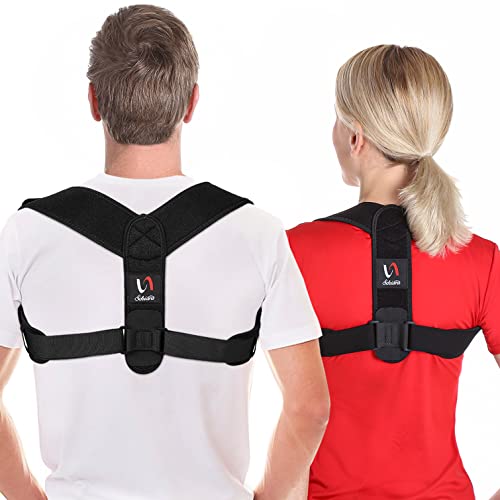
Schiara Posture Corrector for Men and Women, Adjustable Upper Back Brace
by Schiara
The best budget entry point — cheapest in the guide, NBC-recommended for beginners, with the broadest chest-circumference fit in the category.
Pros
- Lowest price of any corrector in this guide, backed by more than 25,000 reviews — the safest low-cost way to test whether postural cueing helps you
- Chest circumference range of 25 to 52 inches is significantly wider than most competitors — accommodates larger body types often excluded by narrower ranges
- Adjustable figure-8 shoulder loops with a padded back connector distribute retraction force more evenly than single-strap designs
- Endorsed as 'best for beginners' by NBC News Select, reflecting broad accessibility for first-time posture brace users
Cons
- Lower elastic tension compared to firmer designs means experienced users seeking strong corrective force may find the resistance insufficient
- Underarm padding is minimal — users at the larger end of the chest range may experience contact pressure at the axilla during extended wear
3. Kodgem Straight Plus — Upgrade Pick
The Kodgem Straight Plus operates on a fundamentally different principle than every passive brace in this review, and that distinction is clinically significant. Every passive brace creates corrective force through mechanical tension — it physically pulls the shoulders back. The Kodgem instead uses a sensor to detect when your posture deviates beyond a calibrated threshold, then delivers a gentle vibration that prompts voluntary correction. This is active biofeedback, not passive correction, and the behavioral science behind it is sound: the body learns faster from immediate consequence than from continuous mechanical load, which is why a progressive training approach can produce measurable, lasting postural change in ways that passive braces, used alone, typically do not.
The strapless design is the secondary standout feature. With no shoulder straps or back panel, the Kodgem hangs from a slim magnetic necklace and stays invisible under any clothing — including fitted athletic wear and dress shirts where even a thin figure-8 strap creates a shoulder-seam artifact. Crucially, the magnetic necklace means there are no adhesive strips to replace, eliminating the recurring consumable cost that dogged earlier skin-adhered trainers. The up-to-two-week battery removes daily charging as a friction point, and the companion app tracks a daily posture score with casual and training modes so the intensity scales as you improve. The honest caveats: it is newer with a smaller review base than the passive braces here, the biofeedback approach only works if you engage with it daily, and some users find the default vibration lasts a beat too long (the app lets you shorten it). For users who have tried passive braces without lasting results, the Kodgem addresses a different mechanism and often produces different outcomes.
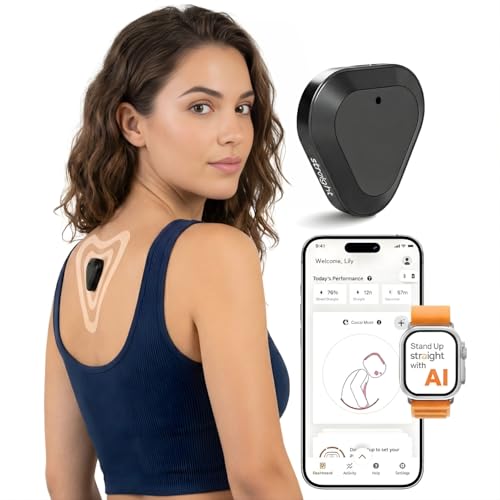
Kodgem Straight Plus AI-Powered Posture Corrector Trainer (Necklace Included)
by Kodgem
Best technology-driven corrector — real-time vibration biofeedback and app-tracked progress, with a magnetic necklace that drops the adhesive cost of older trainers.
Pros
- Biofeedback vibration alert triggers within seconds of slouching, providing real-time correction that passive braces cannot replicate
- Magnetic necklace attachment means no daily adhesive strips — eliminating the recurring consumable cost that older electronic trainers require
- Companion app tracks a daily posture score, sets training goals, and offers casual and training modes so intensity scales with your progress
- Up to two weeks of battery on a charge and a strapless, under-clothing profile that stays invisible even beneath thin fabric
Cons
- Newer to market with a smaller review base than the passive braces here — the biofeedback approach also demands consistent daily engagement to work
- Some users find the vibration reminder lasts a beat too long; the app lets you shorten it, but the default can feel insistent
4. Fitsupport Back Brace Posture Corrector — Runner-Up
The Fitsupport occupies a position in this lineup that no figure-8 brace can fill: a structured design that pairs shoulder retraction straps with a firm lumbar support belt and internal support bars, addressing upper-back rounding and lower-back fatigue from a single device. With more than 12,000 reviews, it also carries the deepest real-world feedback base of any full-back brace reviewed here — meaningful reassurance for a structural product where fit and durability vary more than they do for simple figure-8 straps. For users who experience both rounded shoulders and lower-back ache from prolonged sitting, this dual coverage eliminates the need for separate upper-back and lumbar devices.
The independent adjustability is the key functional detail: the shoulder straps and the lumbar belt tension separately, so you can dial in strong lumbar support without over-tightening the shoulders, or vice versa. The wide waist range on the larger sizes (roughly 26 to 49.5 inches) fits a broad range of body types. The honest limitation is material: the neoprene construction that gives the brace its firm structure also retains heat, making it less comfortable than the mesh options for multi-hour wear in a warm room, and the combined lumbar-plus-shoulder profile is visible under fitted clothing. This is a home, remote-work, and recovery brace rather than an under-the-dress-shirt office option — but for combined back support at its price, it is the most proven choice in the guide.

Fitsupport Back Brace Posture Corrector for Women and Men, Lumbar and Shoulder Support
by Fitsupport
Best combined upper-back and lumbar support — a deeply reviewed structural brace that tackles rounded shoulders and lower-back fatigue together.
Pros
- Combines shoulder retraction straps with a firm lumbar support belt and internal support bars — addresses upper-back rounding and lower-back fatigue in one device
- More than 12,000 reviews give this structural design the deepest real-world feedback base of any full-back brace in the guide
- Dual-adjustable design lets you tension the shoulder straps and lumbar belt independently for the exact support level each region needs
- Wide waist range (roughly 26 to 49.5 inches on the larger size) fits a broad range of body types often excluded by fixed-size braces
Cons
- Neoprene construction retains more heat than mesh alternatives — less comfortable for multi-hour wear in warm environments
- Bulkier lumbar-plus-shoulder profile is visible under fitted clothing and best suited to home, remote work, or recovery use
5. Fit Geno Back Brace Posture Corrector
The Fit Geno distinguishes itself within the full-back brace category through its independent tensioning system: the shoulder loops and the front abdominal belt are separately adjustable, allowing users to calibrate the corrective force asymmetrically. This matters clinically because a meaningful subset of adults with postural imbalances present with asymmetric shoulder elevation — where one shoulder habitually sits higher than the other due to occupational habit, structural scoliosis, or prior injury. A symmetric brace applies equal tension bilaterally and can worsen an asymmetric pattern; the Fit Geno allows compensatory tensioning that a physical therapist can guide the user to calibrate appropriately.
The two-size system (S/M and L/XL) provides better fit accuracy than universal designs at the cost of the one-size convenience. The sizing instruction to measure chest circumference and size up when between measurements is consistent and reliable — reviewers who follow it report good fit; those who guess or select by clothing size report more variability. The front belt’s bulk at the waist is the primary concealability limitation, making this a better choice for remote workers and home-use patients than for office environments where a tucked shirt is expected. For users currently recovering from a back injury under physician guidance, our best crutches guide covers complementary mobility aids that pair well with a structured back brace during rehabilitation.

Fit Geno Back Brace Posture Corrector for Women and Men
by Fit Geno
Best independently adjustable full-back design — asymmetric strap tensioning accommodates uneven shoulder heights.
Pros
- Adjustable shoulder strap loops and a front abdominal belt provide independent tension control for asymmetric postural patterns where one shoulder is elevated
- Covers from lumbar to mid-scapular region with a full back panel — better surface area coverage than shoulder-strap-only designs
- Available in S/M and L/XL for more accurate fit than universal one-size alternatives, with sizing based on chest circumference measurement
- Perforated back panel allows airflow across the thoracic spine during extended seated or standing wear
Cons
- Front abdominal belt adds bulk at the waist — not appropriate for wear under form-fitting clothing or professional attire
- Sizing runs slightly small — reviewers consistently recommend measuring and sizing up if between sizes on the manufacturer chart
6. BigRose Advanced Full Back Support
The BigRose is the breathable answer to the full-back structural brace. Where most rod-reinforced designs rely on neoprene that traps heat, the BigRose builds its four fiberglass support rods into a polyester-nylon mesh panel that moves air across the back during longer wear sessions — a genuine comfort advantage for anyone who has abandoned a structural brace because it got too warm. The X-strap geometry distributes shoulder retraction force across the upper back rather than concentrating it at the underarms, which addresses the axillary pressure complaint common to figure-8 designs.
The result is a device that delivers meaningful thoracic extension and shoulder retraction with less bulk and heat than heavier structural braces, in a single lightweight package that also offers light lumbar support. The honest caveat is review depth: as a newer entrant, its small review base means the strong early rating reflects early-adopter satisfaction rather than the statistical weight of a 10,000-review incumbent — buy it for the design and materials, not the review count. As with all structured braces, the rod profile is visible under fitted clothing, making it a home or remote-work option rather than an office-concealable one. For users who want structure and breathability together, it is the most comfortable full-back option in the guide.

BigRose Posture Corrector Advanced Full Back Support with X-Strap and Support Rods
by BigRose
Best breathable structural option — an X-strap, four-rod full-back brace in cooling mesh that keeps structure without the neoprene heat.
Pros
- X-strap design with four fiberglass support rods delivers structured thoracic extension while distributing shoulder force across the back rather than the underarms
- Breathable polyester-nylon mesh panel manages airflow far better than neoprene full-back braces during longer wear sessions
- Combines shoulder retraction and lumbar support in a single lightweight package that is less bulky than heavier structural braces
- Early reviews are strongly positive on comfort and build quality for a structured, rod-reinforced design
Cons
- Small review base so far — the high rating reflects early-adopter satisfaction rather than the statistical depth of a 10,000-review incumbent
- Structured rod profile is visible under fitted clothing and better suited to home or remote-work wear than the office
7. Kepwaa 5-Rod Full Back Support
The 5-rod Kepwaa is the most structurally supportive brace in this guide. The five ABS support rods add lateral spinal stability that is clinically meaningful for users with more pronounced thoracic kyphosis or those using the brace during light functional activity rather than pure seated desk work. The three-size system (S, M, L) reflects a manufacturer commitment to fit accuracy that generic full-back designs typically skip, and the precise chest-and-waist measurement chart provided for sizing is more clinically useful than the “fits most” language common at lower price points.
The FSA and HSA eligibility is a practical financial advantage that meaningfully reduces the effective cost for anyone with a health savings account, and the perforated mesh construction keeps the broad back-coverage area from overheating the way neoprene full-back braces do. The primary caveat for this product — as for all structured full-back braces — is the visible profile under fitted clothing and the home or remote-work use context that implies. For users managing chronic thoracic fatigue who have been recommended a structured back support, this represents the most supportive consumer option reviewed here. As with all the products in this roundup, if your back or postural symptoms involve pain, numbness, or radiating symptoms, discuss appropriate brace selection with your physician before purchasing.

Kepwaa Posture Corrector for Women and Men, 5 Full Back Support Brace Rods, FSA&HSA Eligible
by Kepwaa
Best structured full-back support — five-rod design delivers the highest structural rigidity among FSA/HSA-eligible consumer posture braces.
Pros
- Five ABS support rods provide additional lateral spinal stability — the highest structural support level among consumer posture braces reviewed here
- Available in three sizes (S, M, L) with precise chest and waist measurement charts, enabling more accurate consumer fit than universal one-size designs
- FSA and HSA eligible — reduces effective out-of-pocket cost by 20 to 37 percent depending on tax bracket
- Breathable perforated mesh panel manages heat across the full back span, addressing the primary comfort complaint of neoprene-based full-back designs
Cons
- Fewer total reviews than established competitors — the 4.4-star rating reflects strong satisfaction but has less statistical depth than 10,000-review alternatives
- Five rods create a noticeably structured profile — not suitable for wear under fitted clothing, limiting use to home, gym, or remote work environments
Best Posture Corrector for Women
Women shopping for a posture corrector most often prioritize a discreet profile that disappears under blouses and fitted tops, plus a fit calibrated for a smaller frame. The ComfyBrace leads here — its ultra-thin figure-8 sits flat under office wear — while the Schiara’s wide, adjustable size range and low price make it the easiest first buy. For women who also want lower-back coverage, the Fit Geno’s independent shoulder-and-waist tensioning adapts to asymmetric shoulder heights that are common with one-sided bag carrying or desk setups.
| Product | Price | Buy |
|---|---|---|
| ComfyBrace Posture Corrector Back Brace for Men and WomenBest for women overall Ultra-thin figure-8 stays invisible under blouses and fitted tops | $25.97 | View on Amazon |
| Schiara Posture Corrector for Men and Women, Adjustable Upper Back BraceBest budget for women Cheapest, widest-fit figure-8 with 25k reviews — the safe first buy | $18.99 | View on Amazon |
| Fit Geno Back Brace Posture Corrector for Women and MenBest full-back for women Independent shoulder + waist tensioning for asymmetric shoulders | $29.99 | View on Amazon |
Best Posture Corrector for Men
Men more often need a wider chest range and firmer corrective force, especially those with broader shoulders or a more established rounded-shoulder pattern. The ComfyBrace fits chests to 43 inches and stays discreet for the office; the Schiara stretches to a 52-inch chest for larger frames; and the Kepwaa 5-rod delivers the firmest structural correction for men who want maximum thoracic support at home or the gym.
| Product | Price | Buy |
|---|---|---|
| ComfyBrace Posture Corrector Back Brace for Men and WomenBest for men overall Discreet figure-8 fitting chests up to 43 inches | $25.97 | View on Amazon |
| Schiara Posture Corrector for Men and Women, Adjustable Upper Back BraceBest wide-fit value Stretches to a 52-inch chest — widest fit for larger frames | $18.99 | View on Amazon |
| Kepwaa Posture Corrector for Women and Men, 5 Full Back Support Brace Rods, FSA&HSA EligibleBest structural for men Five rods for the firmest thoracic correction at home or the gym | $29.99 | View on Amazon |
Best Posture Corrector for Neck Hump and Hunchback
A neck hump (dowager’s or buffalo hump) and hunchback pattern reflect fixed thoracic kyphosis, which needs firmer structural extension than a light figure-8 can provide — plus, ideally, active retraining to change the habit driving it. The Kepwaa 5-rod delivers the most rigid thoracic extension; the breathable BigRose adds structure with less heat for longer sessions; and the Kodgem trainer retrains the forward-head habit through real-time feedback. Fixed structural kyphosis warrants a clinician’s assessment before you rely on a consumer brace.
| Product | Price | Buy |
|---|---|---|
| Kepwaa Posture Corrector for Women and Men, 5 Full Back Support Brace Rods, FSA&HSA EligibleBest for neck hump Five ABS rods force the firmest thoracic extension in the guide | $29.99 | View on Amazon |
| BigRose Posture Corrector Advanced Full Back Support with X-Strap and Support RodsBest breathable structure X-strap structure in cooling mesh for longer daily sessions | $38.50 | View on Amazon |
| Kodgem Straight Plus AI-Powered Posture Corrector Trainer (Necklace Included)Best for habit retraining Vibration biofeedback retrains the forward-head habit over time | $129.00 | View on Amazon |
Best Posture Corrector for Rounded Shoulders
Rounded shoulders and forward-head posture — the classic desk-and-phone pattern — respond best to shoulder-blade retraction, exactly what a figure-8 brace delivers, ideally paired with active retraining. The ComfyBrace is the discreet everyday choice, the Schiara the budget one, and the Kodgem the option that trains the habit away rather than just holding the shoulders back mechanically.
| Product | Price | Buy |
|---|---|---|
| ComfyBrace Posture Corrector Back Brace for Men and WomenBest for rounded shoulders Figure-8 retraction that stays invisible for all-day desk wear | $25.97 | View on Amazon |
| Schiara Posture Corrector for Men and Women, Adjustable Upper Back BraceBest budget option Lowest-cost figure-8 to start correcting rounded shoulders | $18.99 | View on Amazon |
| Kodgem Straight Plus AI-Powered Posture Corrector Trainer (Necklace Included)Best for habit retraining Trains you out of the slouch instead of holding it mechanically | $129.00 | View on Amazon |
Best Posture Corrector for Back Pain
When the complaint is back pain rather than posture alone — especially combined upper-back and lower-back ache — a structural brace with lumbar support does more than a shoulder-only figure-8. The Fitsupport pairs shoulder retraction with a firm lumbar belt and has the deepest review base; the Kepwaa 5-rod adds the most rigid thoracic support; and the Fit Geno’s full-panel coverage with independent tensioning suits asymmetric pain patterns. Back pain with numbness, tingling, or radiating symptoms needs a physician evaluation first.
| Product | Price | Buy |
|---|---|---|
| Fitsupport Back Brace Posture Corrector for Women and Men, Lumbar and Shoulder SupportBest for back & lumbar pain Shoulder straps + firm lumbar belt in one deeply reviewed brace | $34.99 | View on Amazon |
| Kepwaa Posture Corrector for Women and Men, 5 Full Back Support Brace Rods, FSA&HSA EligibleBest structural support Five rods for the most rigid full-back support | $29.99 | View on Amazon |
| Fit Geno Back Brace Posture Corrector for Women and MenBest adjustable coverage Full-panel coverage with independent tensioning for uneven pain | $29.99 | View on Amazon |
Best Posture Corrector for Seniors
Seniors and users with arthritis or limited shoulder mobility need a corrector that is easy to put on and gentle to wear — threading both arms through figure-8 loops behind the back can be the deciding obstacle. The Kodgem is the easiest by far (clip on a necklace, no straps), the Schiara is the lightest and simplest passive option, and the ComfyBrace offers gentle cueing with a discreet, low-bulk profile.
| Product | Price | Buy |
|---|---|---|
| Kodgem Straight Plus AI-Powered Posture Corrector Trainer (Necklace Included)Best for seniors (easiest) Clip-on necklace — no arms-behind-the-back threading required | $129.00 | View on Amazon |
| Schiara Posture Corrector for Men and Women, Adjustable Upper Back BraceBest lightweight passive Light, simple figure-8 at the lowest price for fixed incomes | $18.99 | View on Amazon |
| ComfyBrace Posture Corrector Back Brace for Men and WomenBest gentle everyday Gentle cueing in a discreet, low-bulk figure-8 | $25.97 | View on Amazon |
Best Posture Corrector by Use Case
A few more targeted situations, matched to the right pick from the lineup above:
| Product | Price | Buy |
|---|---|---|
| Kodgem Straight Plus AI-Powered Posture Corrector Trainer (Necklace Included)Best for tech neck Real-time buzz corrects the head-forward phone-and-screen habit | $129.00 | View on Amazon |
| Kepwaa Posture Corrector for Women and Men, 5 Full Back Support Brace Rods, FSA&HSA EligibleBest for kyphosis Five-rod thoracic extension for pronounced upper-back curvature | $29.99 | View on Amazon |
| ComfyBrace Posture Corrector Back Brace for Men and WomenBest discreet under clothes Ultra-thin figure-8 vanishes beneath dress shirts and blouses | $25.97 | View on Amazon |
| Fitsupport Back Brace Posture Corrector for Women and Men, Lumbar and Shoulder SupportBest for lower back / lumbar Firm lumbar belt targets lower-back fatigue from long sitting | $34.99 | View on Amazon |
How to Choose the Best Posture Corrector
The most important decision when selecting a posture corrector is matching the device type to your specific postural pattern and daily wear environment — and those two factors often pull in opposite directions.
For desk workers in an in-person office environment who want postural support they can wear discreetly under professional attire, a thin figure-8 clavicle brace is the appropriate starting point. The ComfyBrace and Schiara are the strongest options in this context, differentiated primarily by chest size range and corrective force preference. Users who want complete discretion and are motivated enough to engage with a feedback-based training routine should consider the Kodgem Straight Plus, which provides the most sophisticated postural feedback of any product reviewed and is genuinely invisible under all clothing.
For users who also experience lower back fatigue from prolonged sitting, or who have been advised by a clinician to support both the upper and lower back, a full-back brace like the Fitsupport, Kepwaa, BigRose, or Fit Geno provides comprehensive coverage that no figure-8 design can match. The Fitsupport pairs the deepest review base with a firm lumbar belt; the Kepwaa’s FSA and HSA eligibility reduces the effective cost for users with health savings accounts; and the Fit Geno’s independently adjustable shoulder loops are particularly valuable for users with asymmetric postural patterns identified by a physical therapist.
One principle applies regardless of product selection: wear duration. Starting with 20 to 30 minutes per day, building incrementally over 2 to 3 weeks, and simultaneously performing the thoracic extension and shoulder retraction exercises your physical therapist recommends produces better and more lasting outcomes than wearing any brace for extended periods without complementary active exercise.
Buyer's Guide
With dozens of posture correctors available across a wide range of designs and price points, the most important decision is matching the device type to your specific postural pattern, lifestyle, and daily wear context.
Brace Type and Mechanism
Most consumer posture correctors use a figure-8 design that loops around both shoulders and pulls the shoulder blades together passively. Structured full-back braces add rigid support rods and lumbar belts for thoracic and lumbar stability. Electronic biofeedback trainers like the Kodgem Straight Plus skip passive hardware entirely, using a sensor to detect slouching in real time and vibrate as a correction cue. The right type depends on your postural pattern and goals: mild rounded shoulders respond well to a figure-8 brace, while users with chronic thoracic kyphosis or lumbar flexion may benefit more from a structured full-back design.
Sizing and Adjustability
One-size-fits-all designs work for the mid-range of body types but often underserve users at the extremes of the size range — either too loose for a 30-inch chest or too restrictive for a 44-inch chest. Products available in multiple sizes, including the Kepwaa (S, M, L), Fit Geno (S/M and L/XL), and Fitsupport (S through XXL), provide clinically more accurate fit. Before purchasing, measure your chest circumference at its widest point and compare against the manufacturer's sizing chart. The Schiara offers the widest single-size range (25 to 52 inches) for users who are frequently excluded by narrower options.
Wearability and Concealability
If you plan to wear the corrector at an in-person office job, concealability is as important as postural effectiveness — a brace you won't wear provides no benefit. Thin figure-8 designs in breathable nylon or mesh (ComfyBrace, Schiara) sit under standard dress shirts without visible lines. The Kodgem Straight Plus is the gold standard for discretion, with no external straps and only a slim necklace. Structured full-back braces with support rods (Kepwaa, BigRose) and lumbar belts (Fitsupport, Fit Geno) are better suited for remote work or home wear, where clothing coverage is less critical.
Breathability and Material
Neoprene and closed-cell foam retain heat and are unsuitable for extended wear in warm environments. Perforated mesh and breathable nylon blends are significantly more comfortable for sessions exceeding 2 hours. The Kepwaa and BigRose use perforated mesh panels that manage airflow across the full back span — a meaningful advantage over the neoprene Fitsupport in warm rooms. If you plan to wear the corrector during light activity, warm-weather commuting, or in a non-air-conditioned environment, prioritize breathable materials explicitly and eliminate neoprene options from consideration.
Ease of Donning and Doffing
Users with shoulder pain, arthritis, or limited range of motion may struggle with figure-8 braces that require threading both arms through loops behind the back. The Kodgem Straight Plus requires only clipping on a necklace — the lowest physical demand of any product reviewed. Full-back braces with front Velcro closure (Fitsupport, Fit Geno) are easier to don independently than rear-closure designs, but still require some arm reach. If independence in managing the brace is a concern due to mobility limitations, this factor should weigh heavily in your selection.
Clinical Appropriateness
A consumer posture corrector is a wellness tool, not a prescription medical device. It is appropriate for desk workers with mild to moderate forward-head and rounded-shoulder posture who want passive or active cueing during daily activity. It is not appropriate for managing diagnosed scoliosis, vertebral fractures, cervical radiculopathy, post-surgical spinal instability, or thoracic outlet syndrome. If your posture complaint involves pain, numbness, tingling, or weakness in the arms or legs, a physician evaluation should precede any brace purchase — these symptoms require clinical assessment, not a consumer orthopedic product.
Final Verdict
For the majority of adults seeking their first posture corrector in 2026, the ComfyBrace Posture Corrector (B07ZQPKTVV) is our top overall recommendation. Its ultra-thin breathable profile, lifetime warranty, and depth of validation across more than 45,000 real-world reviews provide the kind of purchase confidence that no newer competitor can yet match. The Schiara (B07VST9VYH) is the right budget alternative — the lowest price in the guide, more than 25,000 reviews, an NBC News beginner endorsement, and the widest chest-circumference fit in the category.
For users who have tried passive braces without lasting results, the Kodgem Straight Plus (B0DW479M3D) addresses the problem through an entirely different mechanism — real-time biofeedback rather than passive mechanical correction — and its magnetic necklace removes the adhesive cost that made earlier electronic trainers expensive to live with. For users needing combined upper-back and lower-back support, the Fitsupport (B07Q494CNM) delivers a firm lumbar belt and shoulder retraction in the most deeply reviewed structural brace here. As always, if your posture complaint is accompanied by pain, radiating symptoms, or neurological signs, a physician evaluation should precede any consumer brace purchase. Consult your healthcare provider to confirm the appropriate intervention for your specific condition.
Frequently Asked Questions
Do posture correctors actually work?
How long should I wear a posture corrector each day?
What is the difference between a posture corrector and a back brace?
Can I wear a posture corrector to work or the office?
Who should not use a posture corrector?
Related Articles
About the Reviewer

Dr. David Taylor, MD, PhD
Drexel University College of Medicine (MD), Indiana University School of Medicine (PhD)
Dr. David Taylor is a licensed physician and medical researcher who founded BestRatedDocs in 2016. With an MD from Drexel University and a PhD from Indiana University School of Medicine, he combines clinical expertise with a passion for health technology to provide evidence-based product recommendations. Dr. Taylor specializes in health informatics and regularly evaluates medical devices, diagnostic equipment, and therapeutic products to help healthcare professionals and patients make informed decisions.